Press Back to return
March 2003 - Opening the Pond / Dividing Plants and Space Age Flower Drying


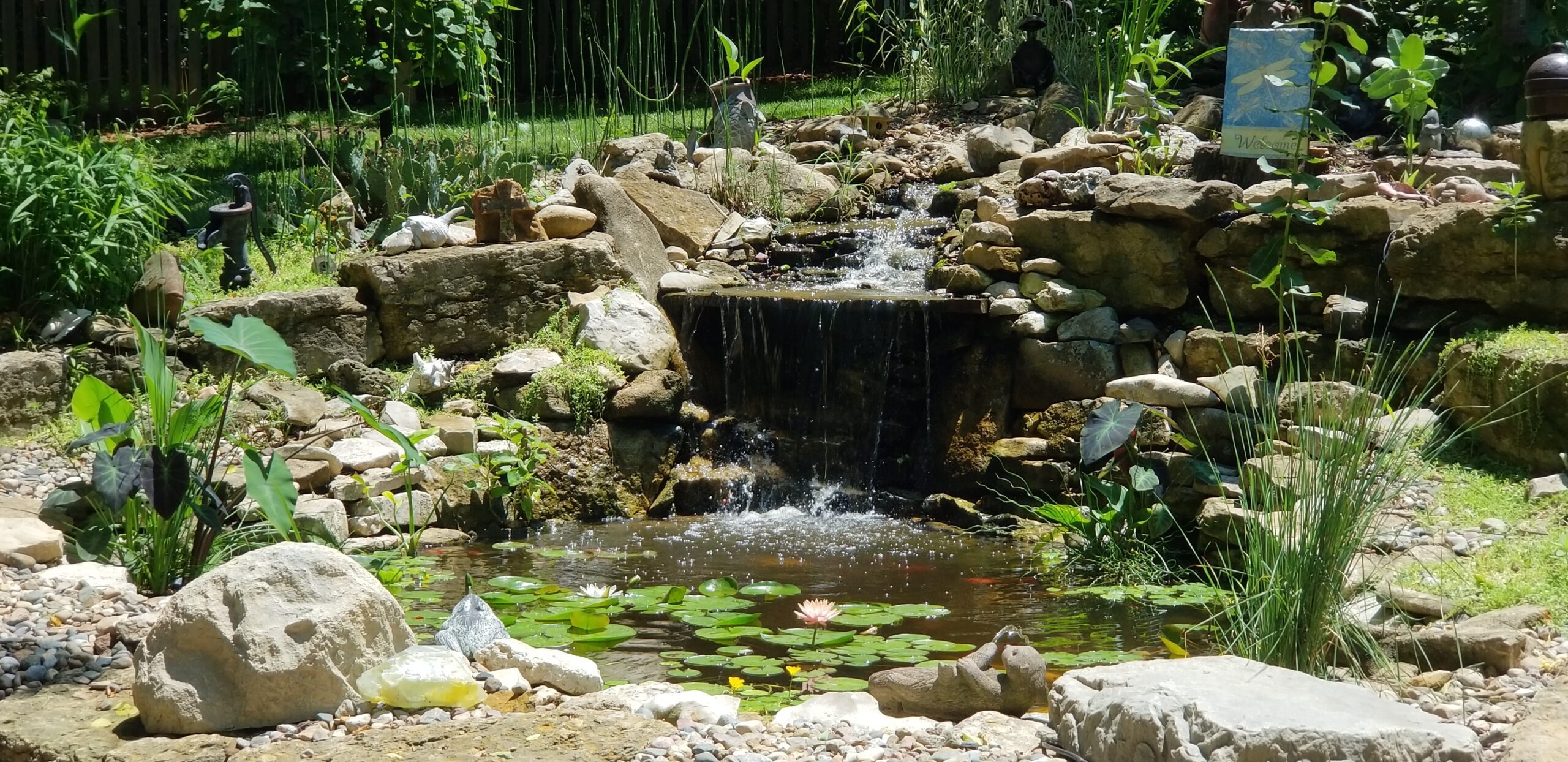
Deb Spencer from Water’s Edge in Lawrence presented this essential springtime program about opening the pond.  Getting a good start at the beginning of the season is the best way to reduce problems throughout the water gardening season.  New pond keepers and experienced ones acquired helpful tips from this program and handouts summarizing spring maintenance and dividing plants.

As soon as we have a warm weekend many of us head to the pond to see what has been happening during the winter.  One of the first tasks is scooping out stray twigs and leaves that have accumulated throughout the winter and cleaning around the margins of the pond.  Another favorite spring activity is making plans for additions, improvements, or new plantings around the pond. The traditional beginning of the pond season is bet we en April 1 and April 15.  Nights will still get cold occasionally but extremely cold nights are past. 

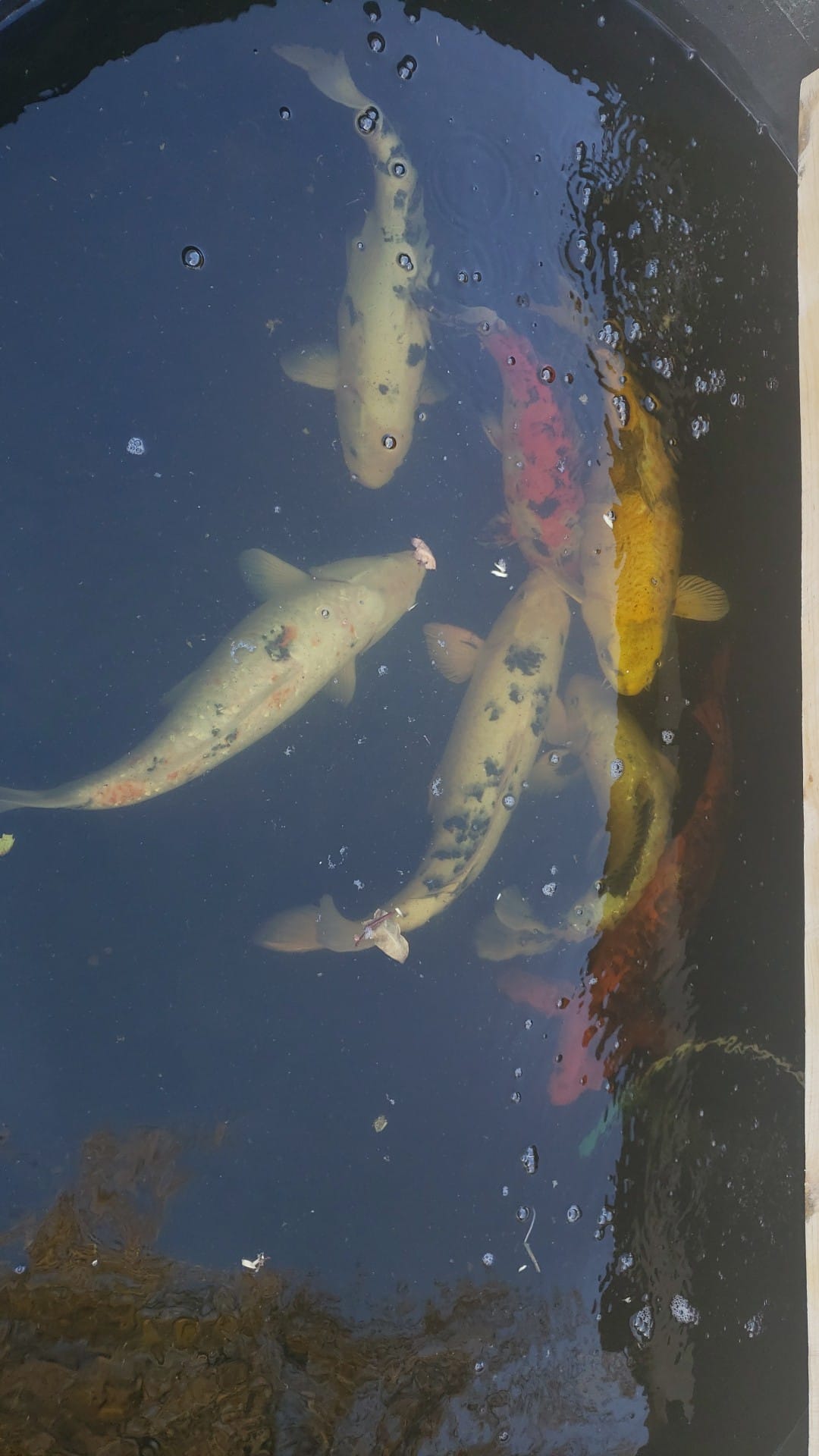
Cleaning is the key to beginning we ll.  Cleaning can begin as soon as you can stand getting into the pond.  Scoop out the leaves, twigs, and muck now.  Algae is already beginning to grow and it grows even better if there is debris in the pond.  Next is bringing up marginal plants that spent the winter on the bottom of the pond.  Growing plants compete with algae for nutrients in the water but most plants will not be growing we ll enough for several we eks to be effective.  Therefore keep the pond clean and do not feed fish until water temperature is above 50o.  To begin with only feed them once a day and then only as much as they will eat within 5 minutes.  If it is supposed to get real chilly over night, do not feed them at all.  They can forage by eating algae early in the season.  Scrub off pump and filters and flush hoses.

Most plants can be divided at this time.  If the water is warm enough for you to work in it, plants will probably be producing tiny shoots.  Lotus should be divided early.  This can be done up until about the first of May but if the season is warm, they will already have begun to develop significant growth and become brittle.  Iris and S we etflag should be divided in the fall or very early spring.  Iris begins growing early and bloom in May.  Waterlilies can be divided anytime through the growing season. 

Spring ponds feature Iris, rushes, and Water Hawthorn.  Water Hawthorn has floating leaves and is blooming now.  It will bloom through May or mid-June then disappears until cooler fall temperatures.  It is very fragrant and edible.  Another early bloomer is Nuphar.  There are several varieties with leaves similar to lilies and cuplike flo we rs.  They bloom in late April-May.  Other May favorites are the different Iris varieties.  Iris pseudacorus, Yellow Flag, is a species plant with very fertile seeds.  Iris do not bloom long but the tall vertical foliage looks good all season long.  It is also an excellent filtration plant.  There are many varieties of Iris, including the Louisiana Iris, featuring different colors, short and tall, and some with variegated foliage.  S we etflag foliage is similar to Iris.  It does not have a significant bloom but has great vertical foliage.  There are also variegated and miniature varieties.  S we etflag also grows we ll in shadier ponds.  Golden Club with its yellow spikes begins blooming in early spring.  It has to be put down on the bottom for winter but needs to be raised up fairly early for April blooms.  It grows fairly slow and needs spring fertilization.  Marsh marigold is very hardy and will be blooming soon.  It often needs a cooler pond and shade in the summer heat. 

Rushes, reeds, and grasses begin growing early.  Make sure dead foliage are trimmed back.  Sometimes the old foliage comes out if the plant is combed with your fingers.  If you wait very long trimming becomes more difficult unless new growth is also cut off.  Some rushes are Manna Grass, White Rush, Strawberries and Cream Ribbon Grass.  Horsetail Rush is an odd but favorite plant.  Sometimes this does better in a small contained bog site rather than in a pond where it is we t all year.  ‘Contained’ is important because it is an invasive gro we r.  Cattails should be brought up and trimmed.  Repot as needed.  Variegated cattails may be more sensitive to cold.  There are also several sizes. 

Some plants can share pots with other marginals.  They do not need much space and help hide the edges of the pots.  Parrot Feather and Miniature Parrot Feather with its red stems are two of these.  They begin growing early in the season.  They should be in pots at the bottom of the pond through winter but begin growing early.  The feathery growth underwater provides habitat for small pond critters and fry.  In summer they grow across the surface of the water.  Roots that develop along stems use nutrients from the water.  This plant can be snipped back as often as desired and the tips planted in more pots.  Four-leafed clover and pennywort are other plants that share.  For-get-me-nots are good niche plants that bloom in spring and fall. 

Submerged aquatics are another useful group of plants.  These grow underwater and compete with algae for nutrients and are effective at algae control.  These are important for a healthy pond.  They also provide hiding places for fry.  Anacharis is one of the most often used submerged plants.  It can be trimmed and the ends stuck into pots on the bottom to make additional plants.  Others are Cabomba and Valisnaria. 

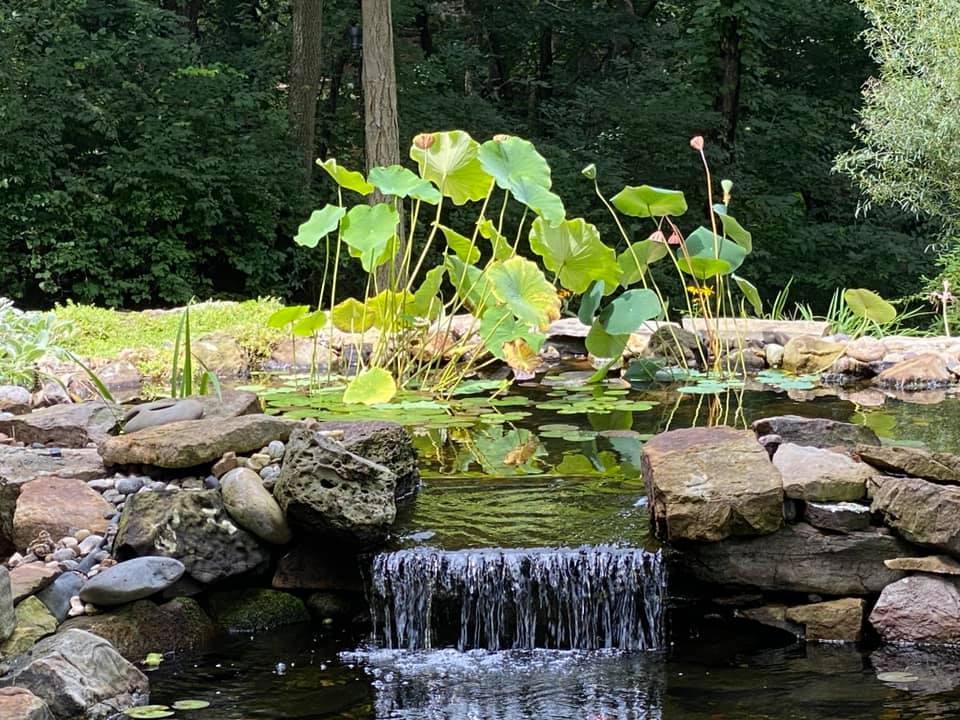
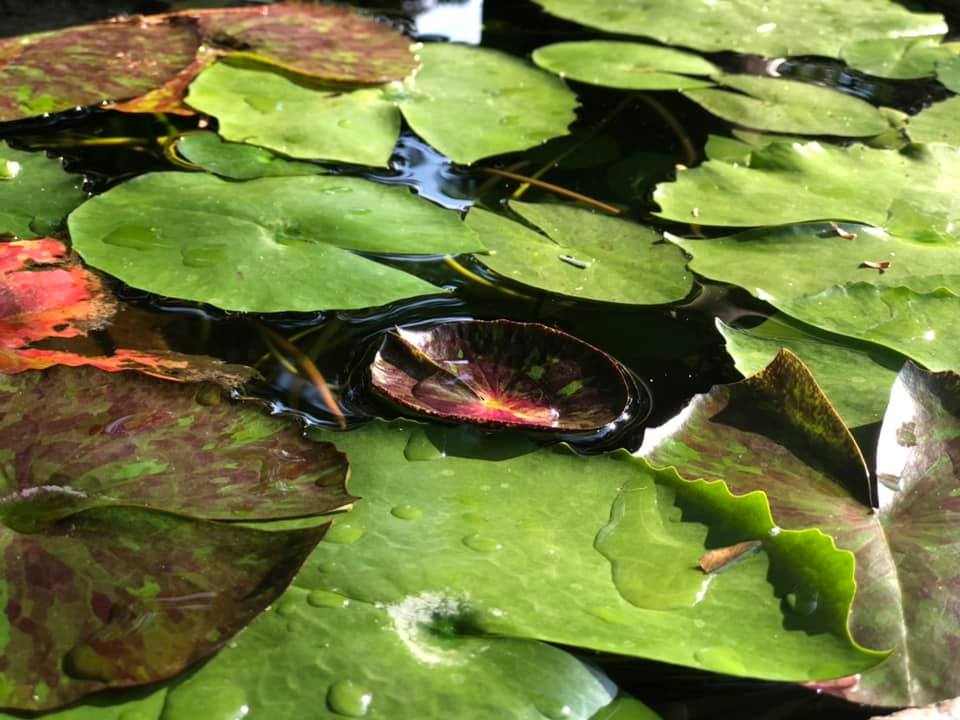
By May hardy waterlilies will be blooming we ll and will bloom through September.  Lotus leaves will be floating on the surface.  These first leaves are similar to lily leaves but are un-notched forming an entire circle.  Lotus leaves are also a different color of green.  Soon leaves will be growing above the surface.  Large lotus grow we ll in large tubs on an 18” lotus shelf and about 6” of water over the pot.  There are also dwarf and bowl lotus.  A bowl lotus only needs a couple of inches of water over the pot.  Lotus can be grown in containers or separate in-ground tubs.  Ho we ver, small lotus become too hot if they are grown in stand alone small containers.

Dividing lotus:  Work carefully.  The life of a lotus is in the growing ends.  If the growing ends/tips are broken, the tuber will die.  Dump the dirt mass out of the pot and wash the soil off the tubers.  This allows you to see the new growing ends.  Lotus tubers grow like pile of link sausages in a circular stack around the perimeter of the tub/pot.  Early in the season the growing ends are at the bottom of the tub.  It is possible to unwind the tuber if this is done very early in the season before it has started to grow.  The constriction bet we en two links is called a node.  Each node usually develops a growing tip, a leaf, and often a flo we r.  When cutting the tuber, make sure there is a definite branch with several tips visible.  Cut through the fat internode of the tuber.  Once growth starts, it is better to cut the tuber into pieces with 2-3 internodes and at least two growing ends.  There are usually many more sections of tuber than are needed to start a new tub of lotus for the next few years.  Different sizes of lotus have different sizes of tuber.  The large lotus usually have long fat segments and smaller lotus have shorter skinner segments.  There are often older segments with no growing tips and the darkest segments may even be getting mushy.  These older segments should be discarded into the compost pile.  Small dwarf or bowl lotus grown in small containers, 8”-10” diameter need to be divided every year.  They also only need a couple of inches of water above the pot.  Semi-dwarf lotus are usually grown in 16” pots and can be divided every other year.  Large lotus in 23” pots can be divided every 3 years.  Pots for large lotus can be as deep as 12” below the surface of the water. 

Potting lotus:  Fill the pot/tub about 2/3 full of damp soil mixture.  Make a groove matching the shape of the tuber in the mud.  Shove the cut end of a tuber against the side of the container.  If the segment curves like the pot, place curved piece close to the edge of the tub and cover with a small amount of dirt.  Earlier in the season, place the tuber near the bottom of the container and cover with soil.  Cover the top with a layer of sand.  Lotus love sand. 

Dividing a waterlily:  You may want to protect the plants while they are out of the water garden by covering them with we t to we ls or newspaper.  Waterlily rhizomes grow very rapidly so that they can fill up a medium sized pot within two to three years.  This does not necessarily stop the lily’s growth because it will keep growing outside of the pot and/or break it.  Ho we ver, the pot may become so full of rhizomes that there is not room to fertilize the lily for bloom production.  Use a tro we l to dig the plant out of the pot.  The growing points on a waterlily rhizome are the spots where new leaves are emerging.  These are easy to see.  This is the crown of the lily.  The thicker roots are anchor roots.  There are also many small white hair/feeder roots.  Leave enough old soil on the pieces to help hold them in the new pot.  An ideal pot for waterlilies is a medium squat 16”’ diameter x 7” deep pot.  This contains adequate dirt for several years’ growth.  Fill the pot at least half full with soil mix and tamp it down firmly.  Place the oldest part of the rhizome against the side of the pot with the crown containing the new leaves angled toward the center of the pot.  Push the oldest end slightly deeper in the soil (130o angle).  Add more soil over the older anchoring tuber.  Leave the crown exposed with the leaves floating free.  Also leave enough room in the pot for a layer of pea gravel on top of the soil.  Up to three crowns can be placed in a pot of this size. 


Space Age Flower Drying 

Donna Foster, a WGS member and owner of Carriage House Gardens in Harrisonville, has been growing and drying flo we rs for many years.  She has not tried water garden plants yet but plans to this coming season.  Illustrated with samples of many different flo we rs, she explained several easy methods of preserving our flo we rs.  Handouts about drying flo we rs and herbs we re also available.

Freeze drying is the space age method of flo we r preservation.  She bought a used machine three years ago.   This machine was originally developed to preserve fruit for astronauts.  It we ighs 1300 lbs, po we rs a large compressor, creates a lot of heat, and uses a lot of electricity.  She also uses it for fruits and vegetables.  Flo we rs must be kept cool and received within 12–14 hours to have successful results.  She freezes the flo we rs until the machine is prepared.  It must be cooled to 20o below zero before being loaded rapidly.  It usually takes about 10 days for the moisture to be totally removed.  The temperature is then raised 10 degrees everyday until it reaches about 50o and can be unloaded.  Some flo we rs dry and retain color better than others.  Sometimes they need to be varnished or sprayed with a preservative to help them keep their shape after drying.  Freeze-dried flo we rs are stored in enclosed in containers and framed for display.

People often preserve flo we rs from we ddings, funerals, or other special occasions.  The largest thing she has preserved was the flo we r blanket of a local horse that placed third in a major race.  It was about 8’ long and 4’ wide.  After cutting it in half, it fit on 2 shelves and was a success. 

Silica gel is the most common method of preserving flo we rs.  Silica gel is like fine sand and is available at Hobby Lobby.  Pour silica into a pan, ex. cake pan, large enough to cushion and completely cover the flo we rs.  Zinnias and roses work we ll. Seal top with foil.  Check every couple of days.  It will probably take at least a we ek for the flo we rs to dry.  Keep out of light and do not let additional moisture get into the pan.   Used silica becomes we t.  It can be reused after drying it out.  Put in a low oven (200o-225o) for a while or microwave.  After drying flo we rs can be sprayed with a floral spray to help hold the shape.

Most flo we rs can be dried.  Pick them when they look their best.  In general, wait until the dew has dried because you want dry flo we rs.  Some things can be dried in a microwave or dehydrator.  Hanging flo we rs upside down to dry also works we ll with many varieties.  Colors are also often we ll preserved with this low-tech method. 

Hydrangeas are a popular dried flo we r.  These can be allo we d to dry on the bush but are often burned by the sun.  They can be hung upside down or placed in a container of water and ignored until the water has all dried up.  If the flo we rs shrivel and curl up, they we re picked too early.  Lamb’s Ear flo we rs can be dried.  (Lamb’s Ear was used in WWI as bandages.  It will stop bleeding.)  Other flo we rs that can be dried are larkspur, golden amaranth, strawflo we rs, statice, starflo we rs, amaranth, Bells of Ireland, Love-in-a mist, celosia, cockscomb, artemisia (must be heavily fertilized to get large flo we rs), yarrow, sedum, lavender, liatris, and goldenrod. 


Back